
Trust Dr. Lisa for the best and most accurate information on the current status of Peptides. There is a lot of misinformation and frankly dangerous advice out there on many social media platforms–buyer beware! Many peptides are not for human use yet and are not coming from a safe source. There are several Peptides available now through our trusted, licensed compounding pharmacies. Dr. Lisa cannot legally or ethically recommend certain other peptides yet, but she is hoping that more will be available soon (stay tuned). If you would like to get the most up to date information on the Peptide landscape, send Dr. Lisa an email request (drprofera@gmail.com) to be added to her contact list.
FAQ’s
What is a Peptide?
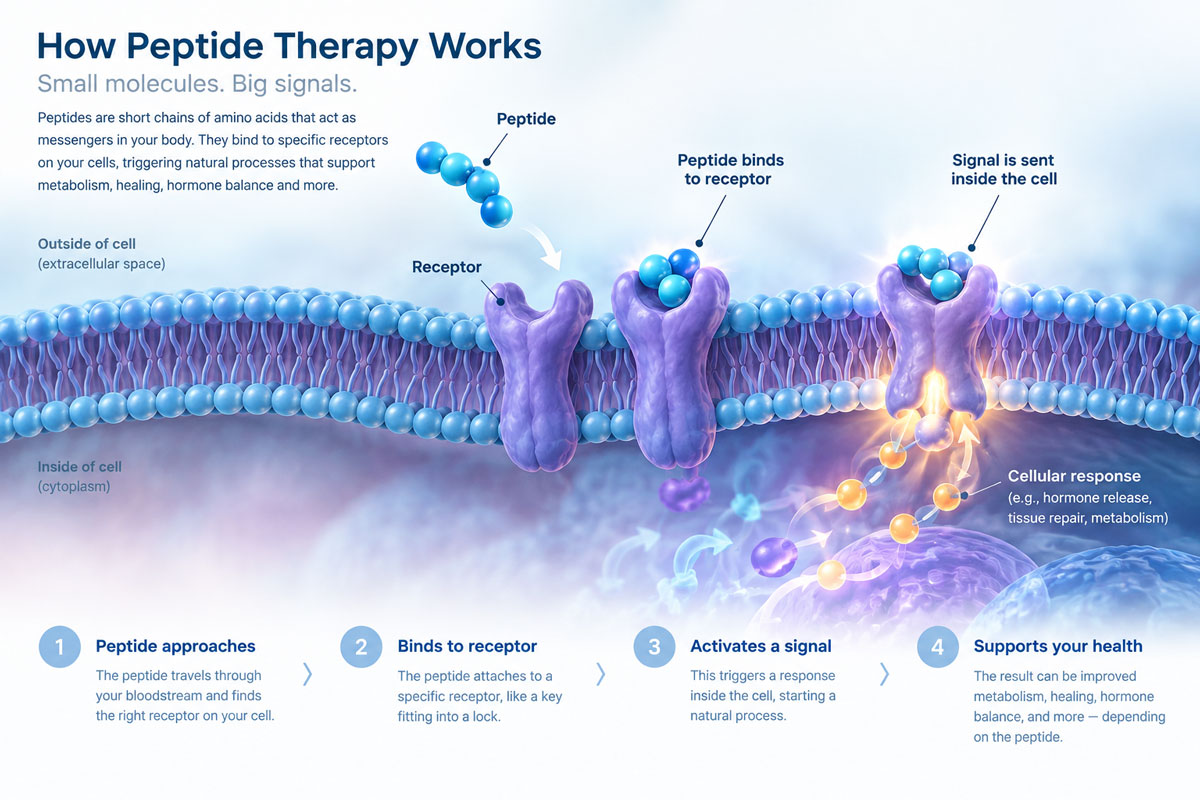
Think of peptides as small biological messengers. They are short chains of amino acids 2-50 links. Anything larger is a called protein.
A peptide binds to a specific receptor and sends a specific signal to a cell.
Your body naturally makes many peptides—over 7,000. Examples: Insulin, Oxytocin, PTH. Therapeutic peptides can mimic, replace, or influence natural signaling. The effect depends on the peptide, receptor, dose, route, and patient. Chemical structure can be modified to last longer. In most cases, injectable peptides are preferred over those taken by mouth since the stomach acid and enzymes break them down very quickly (so only 2% reaches the bloodstream). Some injectable peptides can last up to 1 week in the body.
Which Peptides are available now?
Approved Peptides *:
- GLP-1/GIP medicines such as semaglutide and tirzepatide–for weight loss, blood sugar control, cardiovascular health and more (see Medical Weight Loss page for details).
- Sermorelin (injection, oral)–a GHRH agonist used for anti-aging, healing, body composition, sleep, and recovery.
- GHK-Cu (topical)–skin rejuvenation, hair growth, wound healing.
- Glutathione (injection, oral)–liver support, major antioxidant, metabolic and immune health.
- PT-141/ Bremelanotide Acetate –used for low libido/sexual desire in men and women.
- Oxytocin–the “love hormone”, supports emotional bonding with a partner, sexual pleasure, and overall happiness.
*These have FDA-reviewed indications, dosing, safety information, and manufacturing standards. They can be used off-label in appropriate patients. They may or may not be covered by insurance.
Which Peptides may become available in the future?
The legal landscape is complicated. Some peptides may be considered for compounding in about a year or so. (anyone selling these peptides now are doing it illegally–black market or gray market sources, not safe for human use)
Examples often discussed online include:
- BPC-157, TB-500 for tissue repair and healing.
- CJC-1295, Ipamorelin for growth hormone and IGF-1 support, longevity and recovery.
- KPV for GI healing, colitis
- MOTS-C for mitochondrial and cellular energy, longevity and anti-aging, metabolic support and weight loss.
- GHK-Cu (injectable) for systemic collagen and elastin support, anti-aging and longevity.
- DSIP (Emideltide), Epitalon, Semax for sleep, mood, stress, and cognition support.
Some are being studied; others have limited human evidence. “Research use only” or “animal use” does NOT mean safe or approved for human treatment.
Are peptides legal? Are they FDA-approved?
It depends on the peptide and where it comes from. Some peptides, like insulin, and certain GLP-1 medicines, are approved by the FDA and made under strict safety rules. Some peptides such as sermorelin and topical GHK-Cu come from compounding pharmacies. These pharmacies make personal medicines based on a doctor’s prescription, and state pharmacy boards watch over them.
There is another group of peptides sold as “for research use only.” These are not approved for people to use. They are not made under the same safety rules, and it is not legal for a doctor to prescribe them as treatment.
Why is everyone talking about peptides? What are the potential benefits?
Peptide therapy has become more popular as scientists learn more about how peptides affect metabolism, recovery, hormones, and healthy aging. Depending on the peptide and why it’s prescribed, it may help with weight management, blood sugar control, better sleep and recovery, healing from injury, fatigue, anti-aging, sexual health, or hormone balance.
Keep in mind that results are different for each peptide and each person. Some peptides have a lot of research behind them. Others are still being studied.
Where can I get peptides safely, and how do I tell clinical-grade from research-grade?
Peptides that are safe for people to use should come from one of two places: a licensed pharmacy filling an FDA-approved medicine, or a trusted compounding pharmacy filling a prescription written by a licensed provider after a proper checkup and health screening.
Warning signs of an unsafe source:
- Products labeled “for research use only” or “not for human use” being sold for personal use
- Buying peptides with no doctor visit, prescription, or medical oversight
- No proof that the product is clean, tested, or made by a licensed pharmacy
- A price that seems much lower than what a prescription would normally cost
“Research-grade” peptides are made for lab experiments, not for people. They are not tested for cleanliness or safety, so using them can be risky. Always get your peptides through your provider and a licensed pharmacy.
How are peptides administered?
How you take a peptide depends on the peptide itself and how it needs to travel through your body:
- Under-the-skin injection (SQ): the most common way for many peptides, like GLP-1 medicines and growth hormone peptides; uses a small needle into the fatty layer under the skin
- IV (through a vein): used less often, usually in a clinic for certain treatments
- By mouth: only a few peptides can be taken this way and still work
- On the skin (cream or gel): used for a small number of peptides
- Nasal spray — used for a few peptides, including some oxytocin products
Your provider will tell you the best way to take your peptide and will show you how to do it safely if you’re giving it to yourself.
Are there risks to taking peptides?
Yes, like any treatment, peptides can have risks and side effects. These are different for each peptide. Common side effects can include redness, swelling, or bruising where you got the shot, nausea, bloating, headache, or feeling tired. Some peptides can affect blood sugar, blood pressure, or hormone levels, so your provider will want to keep an eye on these.
Many peptides are still fairly new, so we don’t yet have long-term safety information for all of them. Buying peptides from an unsafe or “research-grade” source makes the risk much higher, because the product could be contaminated, the dose could be wrong, or the label could be inaccurate. Seeing your provider regularly helps catch and manage problems early.
Can I take peptides if I’m on other medications or have medical conditions?
Maybe, but your provider needs to check your full health picture first. Some health conditions, like active cancer, uncontrolled thyroid disease, pregnancy or breastfeeding, or serious kidney or liver disease, may mean a peptide isn’t safe for you, or that you can only use a lower dose. Some peptides can also affect how other medicines work, including insulin, blood pressure medicine, or other hormone treatments.
Before you start any peptide, tell your provider about every medicine, vitamin, and supplement you take, and about your full health history. For certain peptides, it is important to stay up to date on regular cancer screening labs and diagnostic tests such as colonoscopy, mammograms for women and PSA for men.
Can I take more than one peptide at a time for different indications?
Sometimes, yes. Providers may prescribe more than one peptide at a time, like pairing a growth-hormone peptide with a healing peptide, when it makes sense for your care. But this should only be done with your provider’s guidance, because mixing peptides can change how much you need, raise the chance of side effects, or cause problems that aren’t obvious when you look at each peptide alone.
Never add a new peptide on your own, including anything bought without a prescription, or without checking with your provider first.
How long before I notice results, and how is treatment monitored?
This is different for everyone and for every peptide. Some changes, like less appetite with GLP-1 medicines, can show up in days or weeks. Others, like healing or body changes, can take weeks or months of steady use. Your provider will usually schedule check-in visits and lab tests to track how you’re doing, adjust your dose, and watch for side effects. Staying on top of these visits is an important part of using peptides safely.
Do I need blood work or a screening before starting?
Yes. Getting labs (most of the time but not always) and reviewing your health history is a normal part of starting peptide therapy safely. Depending on the peptide, this might include hormone tests, tests that check how your organs are working, or other specific screenings. This starting-point testing helps your provider make sure the peptide is right for you, pick the right starting dose, and compare how you’re doing later on.
How should peptides be stored and handled?
Most peptides you inject are sensitive to heat, light, and shaking. Many need to be kept in the fridge once they’re mixed with liquid. Some come as a dry powder that must be mixed with a special sterile water before use, and then used within a certain amount of time. Storage steps are different for each peptide, so always follow the instructions from your pharmacy. Always throw away used needles and vials in an approved sharps container.
What’s the difference between compounded and manufacturer-made peptides?
Manufacturer-made peptides are FDA-approved medicines made in large batches by a pharmaceutical company under strict federal rules, with a set dose and formula. Compounded peptides are made one at a time by a licensed compounding pharmacy, based on your provider’s prescription. This allows for a custom dose or a form of the medicine you can’t buy elsewhere.
Will insurance cover peptide therapy?
This depends a lot on your plan. Some FDA-approved peptide medicines, like certain GLP-1 medicines for diabetes, may be covered when there’s a clear medical need, though coverage for weight loss or other off-label uses is often limited. Compounded peptides, and most peptides used for anti-aging, performance, or hormone balance, are usually not covered by insurance and are paid for out of pocket. Dr. Lisa can help you understand the costs before you start treatment.
OTHER QUESTIONS?
This guide is meant to start a conversation, not to replace a visit with your doctor. Please contact your health care provider if you have any questions about whether peptide therapy is right for you. Dr. Lisa is happy to answer your questions if your primary care provider can’t. drprofera@gmail.com www.projuvu.com